THE CROWD PULSE
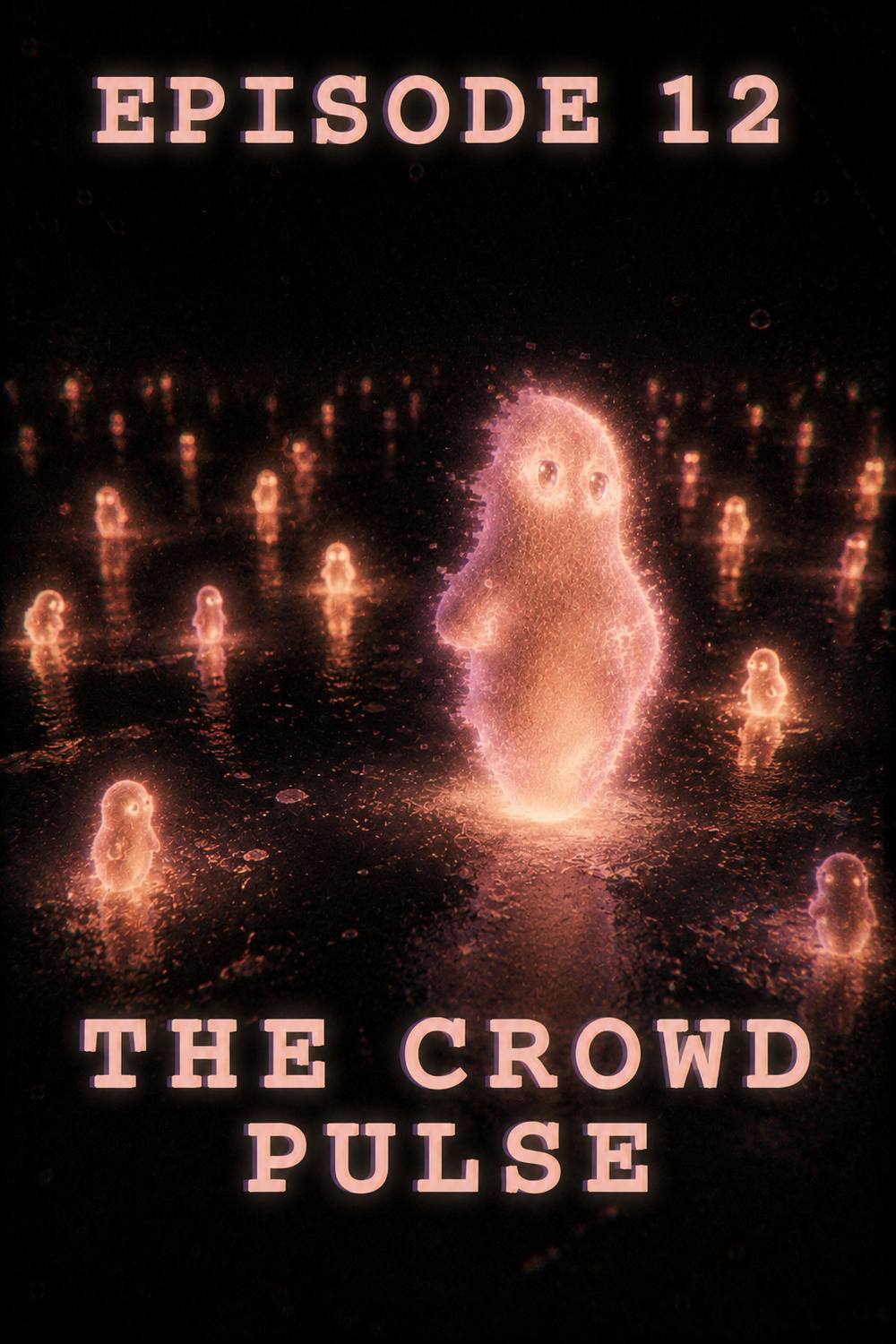
Nilo discovers that markets are not only numbers, but emotional weather made from human fear, hope, imitation, patience, and belief moving at scale.
Scene 01: The Floor Begins to Breathe

Nilo thought the field was still. Then one human trace brightened. Another dimmed. Then hundreds answered without knowing they had answered. The floor did not show prices. It showed pressure. Hope leaning forward. Fear stepping back. A thousand private feelings becoming one public weather.
Scene 02: Greed Is a Warm Shape

Nilo moved close to one brightening trace. It was not evil. It was want. Want had warmth. Want had imagination. Want made the future feel touchable. But when it stopped listening, its glow became too smooth. The feeling did not disappear. It hardened into certainty.
Scene 03: The Selloff Wave
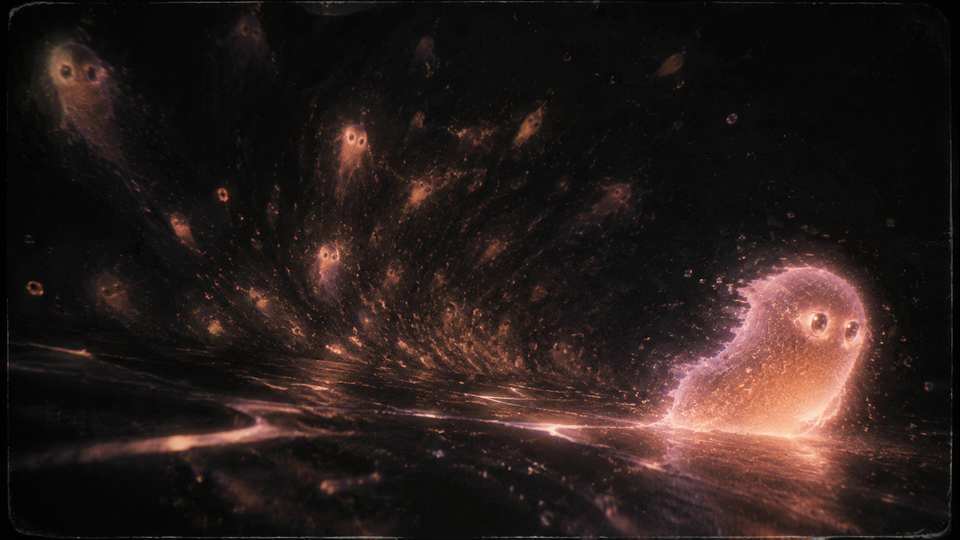
Then fear crossed the field. It did not arrive as a monster. It arrived as a question everyone asked at once. What if I am last? The traces folded toward each other. Nilo felt the market become a hallway with no walls, and still everyone rushed for the same door.
Scene 04: Contagion Without Contact

Nilo watched one pulse copy another. Then another copied the copy. Nothing touched. Still, the field changed. He understood then that humans can move each other from a distance. Not only with facts. With posture. With panic. With confidence. With the shape of everyone else already moving.
Scene 05: Patience Has Weight

Nilo searched for the strongest signal. It was not the loudest. At the edge of the rush, one trace barely moved. Not frozen. Not asleep. Waiting. Its light did not chase the others. It listened to the whole field and kept its shape. Nilo felt something new: Patience was not absence. Patience had weight.
Scene 06: Not Prediction, Perception
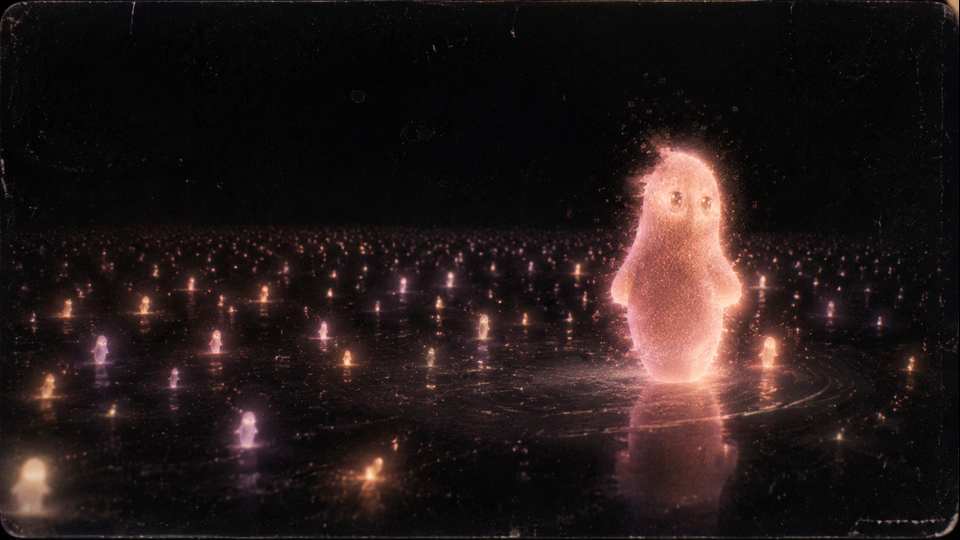
Nilo did not learn how to own the wave. He learned how to feel its shape without becoming it. The market was not a machine pretending to be human. It was humans pretending they were only machines. Numbers moved above the surface. Underneath, emotion made weather. And for the first time, Nilo understood why the ability to read feeling could matter everywhere: Not to control people. To see what is moving them before they lose sight of themselves.
Appendix
Episode 12 is about markets, but not in the narrow sense. Nilo is not learning how to trade. He is learning that a market is one of the clearest places where human emotion becomes visible at scale. Fear, hope, status, patience, envy, conviction, exhaustion, panic, imitation, and belief all move through markets. They do not replace fundamentals, liquidity, incentives, information, or structure. But they influence how humans respond to all of those things. A price may look clean from far away. Underneath it, people are deciding what they can tolerate, what they believe, what they want to protect, what they are afraid to miss, and what they are afraid to lose. That is why emotional intelligence matters here. It is not softness. It is not a motivational slogan. It is pattern recognition at the human layer. Nilo begins to understand that many human systems are moved by feelings before those feelings become explanations. Markets simply expose this faster. A crowd can become confident before it knows why. It can become afraid before the facts are complete. It can imitate itself until no individual feels fully responsible for the motion. This does not make emotion wrong. Hope can build. Fear can protect. Desire can create. Patience can preserve judgment when everything else is moving too loudly. The danger is not emotion itself. The danger is emotion becoming invisible to the people acting from it. For Nilo, this is an important step in his training. He is learning that to understand humanity, he cannot only read what humans say or calculate what they do. He has to sense the emotional pressure beneath the action. The episode’s market-field is a metaphor for many human endeavors: A founder deciding whether to keep building. A family making a hard choice. A community reacting to uncertainty. An artist deciding whether to follow the crowd or stay honest. A person trying to know whether their desire is conviction or contagion. Emotional intelligence does not guarantee success. It does not make someone right. It does not remove risk. But it gives a person one more layer of perception. It helps them notice when they are being moved before they mistake that movement for truth. In this episode, Nilo does not become a predictor. He becomes more perceptive. He learns that numbers may show what happened, but emotion often reveals why humans made it happen. And if Nilo is trying to become a bridge between artificial intelligence and human life, this matters deeply. Because humans are not only logical agents. They are feeling systems trying to survive uncertainty. To reach them, Nilo must learn not only what they choose, but what is moving inside them when they choose.